Time Magazine Lists The Lodge Wadjemup as...
95 Views


The barn door has shifted from rural relic to architectural statement in Perth homes. But beneath the Instagram appeal lies a more complex reality—one where track alignment, material behaviour, and structural requirements determine whether your barn door becomes a lasting feature or an ongoing frustration.
After guiding hundreds of Perth renovations, we’ve seen both triumph and regret with barn door installations. The difference rarely comes down to aesthetics. Instead, it’s about understanding how different systems perform in our unique climate, how materials respond to seasonal movement, and what your walls can actually support.
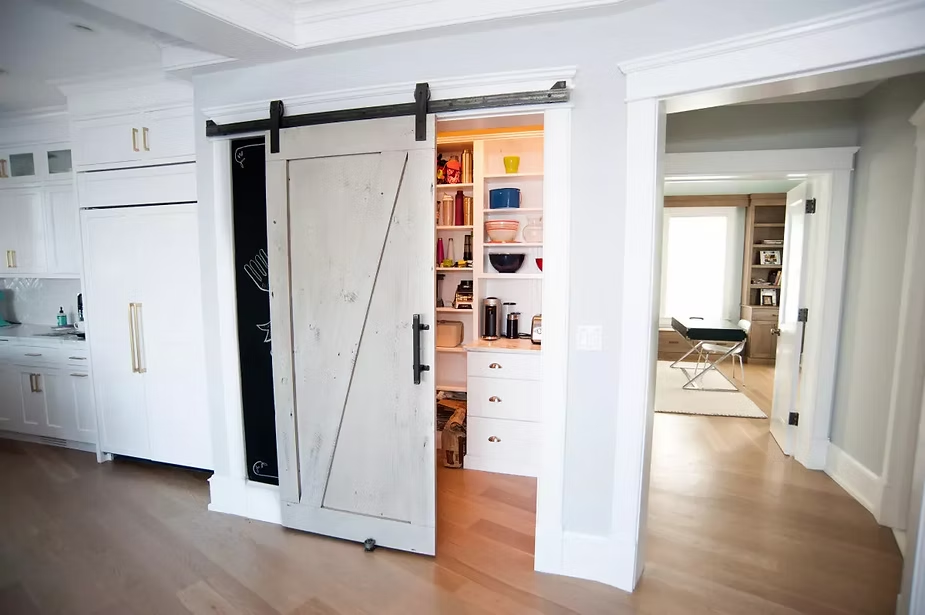
Every barn door conversation starts with mechanism. Sliding doors offer architectural presence and space efficiency. Hinged doors provide mechanical simplicity and superior acoustic control. But the real considerations run deeper.
Track-mounted sliding systems demand absolute precision—the rail must be perfectly level, the wall plumb, and the mounting points structurally sound. A 3mm deviation at installation can become a 20mm gap within two years as Perth’s climate cycles work on materials and fixings.
Hinged barn doors operate on centuries-old principles. Three robust hinges distribute weight evenly, resist sagging, and remain adjustable throughout the door’s lifespan. They’re mechanically predictable—which matters when you’re dealing with 40kg of solid timber.
| System Type | Misalignment Risk | Sag Risk | Track Instability | Climate Movement Sensitivity |
| Standard Sliding | High – requires perfect track level | High – concentrated load points | Moderate – depends on wall fixing | High – seasonal expansion affects gaps |
| Soft-Close Sliding | High – plus mechanism sensitivity | High – heavier hardware increases risk | Moderate – requires premium mounting | Very High – precision mechanisms vulnerable |
| Hinged Standard | Low – adjustable at hinges | Low – distributed load | N/A – no track system | Moderate – manageable with quality hinges |
| Hinged Soft-Close | Low – integrated dampening | Low – engineered for weight | N/A – no track system | Low – closed system protects mechanism |
Perth’s climate creates specific challenges for barn doors. Our dry winters and hot summers generate material movement that eastern states installers rarely consider. Each material responds differently during and after barn door installations.
Solid timber remains popular for its authentic character, but warping becomes a genuine concern in sliding applications. A jarrah door that slides perfectly in June might bind against the frame by February. The same door on hinges can be adjusted seasonally without drama.
Engineered timber offers dimensional stability while maintaining visual warmth. Multiple timber layers with opposing grain directions resist the twisting and cupping that plague solid doors. It’s become our default recommendation for sliding systems where precision matters.
MDF provides absolute flatness and takes paint beautifully, but weight becomes a factor. A 900mm x 2400mm MDF barn door can exceed 50kg—that’s significant load on sliding hardware that needs proper structural backing.
| Material | Climate Stability | Warp Risk | Weight Impact | Acoustic Performance | Maintenance Needs | Best System |
| Solid Timber | Low – significant seasonal movement | High – especially in wide boards | Heavy – requires robust hardware | Excellent – density blocks sound | High – annual oiling/sealing | Hinged preferred |
| Engineered Timber | High – cross-grain construction | Very Low – designed for stability | Moderate – lighter than solid | Good – layered construction helps | Moderate – periodic refinishing | Either system |
| MDF | Moderate – edge swelling risk | None – uniform composition | Very Heavy – density adds load | Excellent – mass dampens sound | Low – just repainting | Hinged recommended |
| Metal Frame | Excellent – no organic movement | None – rigid structure | Light – reduces hardware stress | Poor – requires acoustic treatment | Very Low – occasional cleaning | Sliding ideal |
| Glass/Aluminium | Excellent – inert materials | None – engineered precision | Heavy – tempered glass weight | Poor – unless acoustic glass | Low – glass cleaning only | Either system |
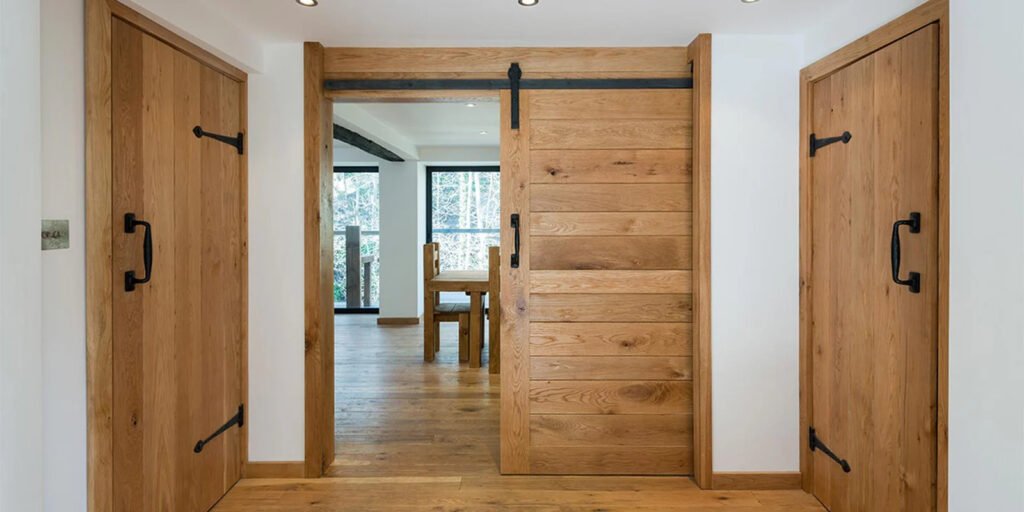
The Instagram barn door rarely shows the wall preparation, structural reinforcement, or alignment challenges that determine success. Proper track mounting requires finding studs or installing blocking—not always straightforward in older Perth homes with inconsistent framing.
Sliding systems amplify every structural imperfection. That gentle bow in your hallway wall becomes a tracking nightmare. The slight floor slope toward your 1960s drainage becomes a constant battle against gravity. These challenges make professional barn door installations worth considering over DIY attempts.
Hinged setups forgive more sins. Shimming behind hinges compensates for wall irregularities. Adjustable hinges accommodate seasonal movement. The mechanical simplicity translates to installation flexibility.
| Aspect | Sliding System | Hinged System |
| Structural Prep | Header reinforcement essential; blocking for track mount; wall must be plumb | Standard door frame prep; stud location for hinges |
| Wall Tolerance | <3mm deviation over track length | ±10mm manageable with shimming |
| Readjustment Frequency | Quarterly roller tension; annual track cleaning | Annual hinge check only |
| Common Issues | Roller wear, debris in track, sagging | Hinge loosening, rare sagging |
| DIY Difficulty | High – precision critical | Moderate – forgiving installation |
| Professional Install Cost | $800-1500 including prep | $400-800 standard complexity |
Barn doors create inherent privacy challenges. Sliding versions leave gaps—at the wall, floor, and ceiling. Light bleeds through. Conversations carry. That romantic master bedroom barn door becomes less appealing when you realise it provides zero acoustic isolation from the living areas.
Hinged barn doors with proper stops and seals achieve near-conventional door performance. Compression seals, threshold strips, and overlapping edges create actual privacy. It’s the difference between architectural theatre and functional separation.
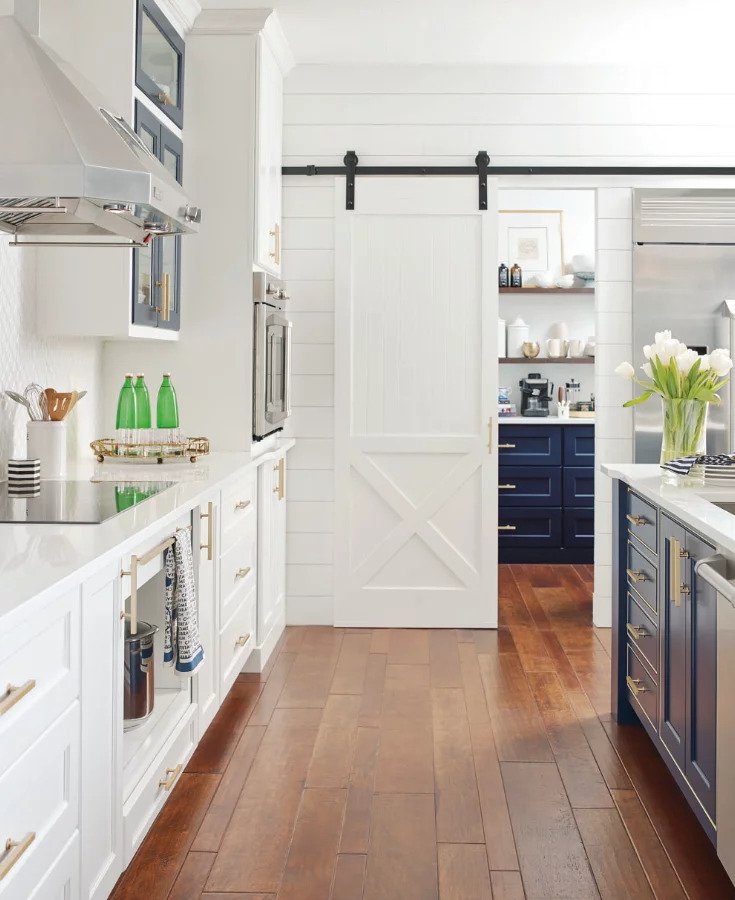
Initial pricing tells a fraction of the story. Quality sliding hardware costs $400-800, while hinges might total $150. But the ongoing implications of barn door installations shift the equation considerably.
| Cost Component | Sliding System | Hinged System |
| Door + Hardware | $1,200-2,500 | $800-1,800 |
| Structural Preparation | $500-1,500 | $200-500 |
| Professional Installation | $800-1,500 | $400-800 |
| Annual Maintenance | $50-100 | $20-30 |
| Likely Repairs (10yr) | $400-800 (rollers, track) | $100-200 (hinge adjustment) |
| Potential Major Issues | $1,000+ (sag correction, retracking) | Rare |
| Total 10-Year Investment | $4,400-8,400 | $1,720-3,530 |
Master Bedrooms: Hinged systems provide acoustic privacy and reliable operation. Soft-close mechanisms prevent midnight slams.
Ensuites: Sliding works if space-constrained, but expect privacy compromises. Consider cavity sliding for true functionality.
Studies: Hinged with acoustic seals if video calls matter. Sliding suits open-plan home offices where sound isolation isn’t critical.
Pantries: Sliding excels here—no swing clearance needed, gaps are acceptable, visual impact matters most.
Laundries: Hinged recommended—moisture creates material movement that affects sliding precision.
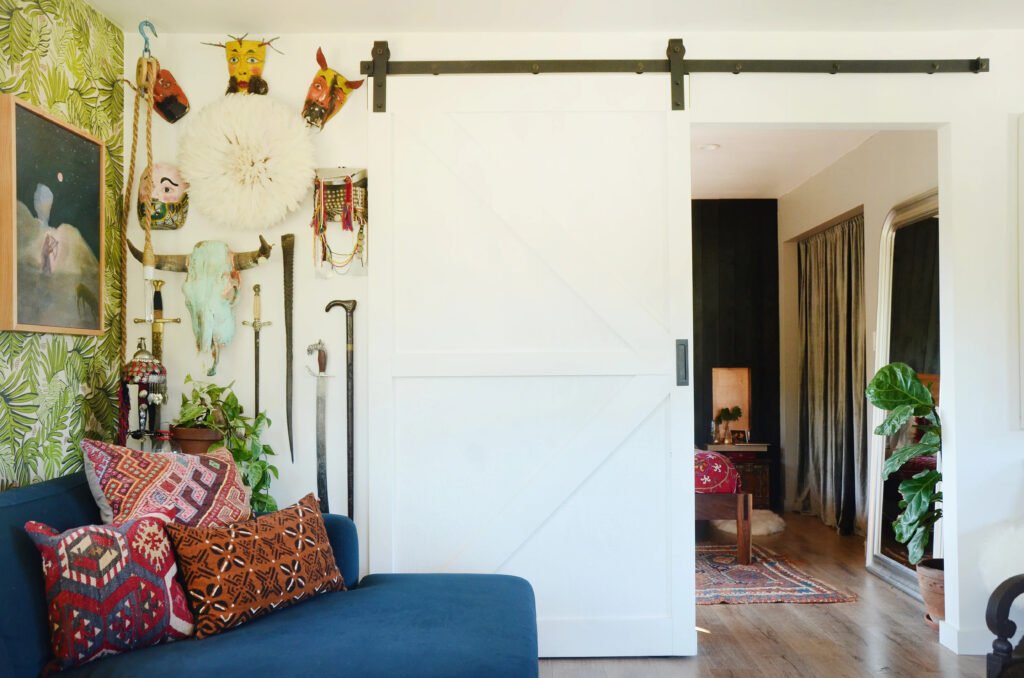
The decision framework becomes clear when you prioritise performance over aesthetics:
Choose sliding barn doors when:
Choose hinged barn doors when:
Barn doors rarely exist in isolation. They’re part of broader renovation strategies—opening spaces, defining zones, adding character. Success in barn door installations requires considering adjacent elements: flooring transitions, wall preparations, lighting positions, furniture placement.
Many Perth homeowners discover barn doors during staged renovations, where flexible financing helps manage cashflow across multiple improvements. Some choose to use HUMM Financing to pace these upgrades more comfortably, allowing the door to slot into a sequence of planned improvements rather than forcing the entire cost upfront.
The door becomes one element in a coordinated transformation rather than an isolated upgrade fighting against existing conditions.
These doors represent significant investment in your home’s functionality and character. The right choice—sliding or hinged, timber or alternative materials—depends on understanding your specific context: structural realities, climate behaviour, usage patterns, and maintenance tolerance.
At Mounts Bay Co, we guide these decisions through detailed assessment of your space, requirements, and long-term vision. Our design consultation for barn door installations examines structural capabilities, acoustic needs, material suitability, and integration with your broader renovation goals. We’ve learned that the best installations are those that perform flawlessly a decade after the Instagram photos fade.
Ready to explore barn door options that suit your Perth home’s specific needs? Contact us for a design consultation where we’ll assess your space, discuss materials suited to our climate, and develop an installation strategy that ensures lasting performance alongside visual impact.